Language/Bahasa

Showing posts with label acute renal failure. Show all posts

Tuesday, 25 December 2012

MEDICAL NUTRITION THERAPY FOR ACUTE RENAL FAILURE

What is the goal of dietary management for acute renal failure patient??? The recommendation for both micro and macronutrient below which is established for acute renal patient intended to limit further renal injury and also to prevent malnutrition.
Come and have a look about the recommended amount of both micro and macronutrient!


Nutrient
Suggested prescription
Rationale
Energy
30- 35 kcal/kg body weight
Based on nutritional status and stress level of the patient
Protein
Nondialysis patients    :  0.8-1.2 g/kg
Hemodialysis patients : 1.2-1.5 g/kg
CAPD patients             : 1.2-1.3 g/kg
CCPD patients             : 1.2-1.3 g/kg
CRRT patients              : 1.5-2.0g/kg
Increase as GFR is back to normal. High biological value protein should be provided for at least 60%
Sodium
1.1-1.3 g/day
Depending on urinary output, blood pressure, edema, dialysis and serum sodium level; replace loss in diuretic phase.
Excess sodium can increase fluid retention.
Potassium
2-3 g/day
Depending on urinary output, dialysis and serum potassium level; replace loss in diuretic phase.
Excess potassium can result in severe cardiac and neuromuscular complications.
Fluid
24- hours urine output + 500 ml
Based on urinary sodium and total urine output
Phosphorus
Limit as needed
Excess phosphorus may result of decreased renal phosphorus excretion and increased endogenous release of phosphates.
 It can also interact with calcium to weaken bones.
It has negative effects on the heart tissue, blood vessels, and lungs.
May need supplementation with tube feeding and/or with TPN.
Magnesium
                      Limit as needed
Excess magnesium can affect neuromuscular, cardiovascular and neurologic systems
Calcium
                   1.0- 1.5 g/day
May require supplementation as needed
Vitamin/ Minerals
            Supplement as needed
May need to supplement water soluble and fat soluble vitamin, especially vitamin B & C

This is the recommendation of intake for acute renal failure patient and can be used as a guidance for daily dietary intake. If you can't understand on how this recommendation works, don't worry! Go and meet your dietitian and she/ he will determine how much to take, which food is appropriate for your diet and which to avoid based on your individual needs.
Meet your dietitian now and he/she will help you out on your diet =)

MEDICAL NUTRITION THERAPHY FOR ACUTE RENAL FAILURE

Pengurusan diet untuk pesakit kegagalan buah pinggang akut bertujuan untuk mengelakkan buah pinggang dari mengalami kerosakan yang lebih teruk dan juga untuk memastikan pesakit mendapat nutrisi yang secukupnya. 

Disertakan di sini adalah kuantiti pengambilan mikro dan makronutrient yang disarankan untuk pesakit buah pinggang akut:
 
Nutrien
Preskripsi yang dicadangkan
Rasional
Tenaga
30- 35 kcal/kg berat badan
Berdasarkan kepada status pemakanan dan tahap stress pesakit.
Protein
Pesakit tanpa dialisis   :               0.8-1.2 g/kg
Pesakit dengan haemodialisis :    1.2-1.5 g/kg
Pesakit dengan CAPD : 1.2-1.3 g/kg
Pesakit dengan CCPD : 1.2-1.3 g/kg
Pesakit dengan CRRT  : 1.5-2.0g/kg
Pengambilan meningkat apabila GFR (kadar penapisan glomerular) kembali normal. Protein yang tinggi nilai biologi perlu diambil sekurang- kurangnya 60%.
Sodium
2-3 g sehari
Bergantung kepada pengeluaran air kencing, tekanan darah, edema, dialysis dan paras serum sodium; diperlukan untuk menggantikan sodium yang hilang ketika fasa diuretik
Sodium yang berlebihan boleh menyebabkan penahanan cecair di dalam badan.
Potassium
2-3 g sehari
Bergantung kepada pengeluaran air kencing, dialysis dan paras serum potassium; diperlukan untuk menggantikan kehilangan potassium ketika fasa diuretik
Potassium yang berlebihan boleh mengakibatkan komplikasi pada jantung dan saraf.
Cecair
24- jam pengeluaran air kencing + 500 ml
Berdasarkan sodium dalam air kencing dan jumlah pengeluaran air kencing.
Fosforus
Hadkan seperti yang diperlukan
Lebihan fosforus boleh menyebabkanpenurunan perkumuhan fosforus oleh buah pinggang dan meningkatkan pembebasan fosfat ke dalam sel.
 Fosforus juga boleh bertindakbalas dengan kalsium untuk melemahkan tulang.
Fosforus mempunyai kesan negative terhadap tisu jantung, salur darah dan peparu.
Magnesium
Hadkan seperti yang diperlukan
Lebihan magnesium boleh memberi kesan kepada sistem saraf, kardiovaskular dan neurologi.
Kalsium
1.0-1.5 g sehari
Mungkin memerlukan makanan tambahan seperti yang diperlukan.
Vitamin/ Mineral
Tambah seperti yang diperlukan
Mungkin memerlukan suplemen untuk vitamin larut lemak dan larut air terutamanya vitamin B & C
 
Ini merupakan saranan pengambilan makanan untuk pesakit kegagalan buah pinggang akut yang boleh dijadikan panduan dalam pemilihan makanan seharian. Sekiranya anda tidak memahami bagaimana untuk mengaplikasikan saranan ini dalam pemakanan seharian, jangan risau! Dietitian- dietitian terlatih sedia untuk membantu anda.Berjumpalah dengan mereka sekarang dan mereka akan membantu anda sebaik yang mungkin untuk memsatikan anda mendapat pengambilan makanan yang secukupnya berdasarkan keadaan kesihatan dan tubuh badan anda.

Saturday, 15 December 2012

OVERVIEW OF ACUTE RENAL FAILURE


Definition

Acute renal failure (ARF) is a sudden loss of the kidney functions in term of glomerulus filtration rate (GFR), blood pressure (BP) and urinalysis. 

Risk factors

ARF can be categorized into three general groups:


1.       Pre-renal
Sudden and severe drop in BP due to shock (accident, severe injuries, illness) or interruption of blood flow to the kidneys.

2.       Intra-renal
Direct damage to the kidneys by inflammation, toxins, drugs, infection or reduced blood supply.

3.       Post-renal
Sudden obstruction of urine flow due to enlarged prostate, kidney stones, bladder tumor or injury.

Saturday, 24 November 2012

DIAGNOSIS TEST FOR ACUTE RENAL FAILURE


Acute Renal Failure is usually diagnosed using:
1. Urine test
2. Blood test
3. Imaginary test
4. Biopsy


URINE TEST


Picture : urine sample

The causes of kidney can be determined by looking urine output.
Urine test or urinalysis can show colour, amount, clarity, and odour. Acute renal failure usually have dark urine colour, indicating that creatinine and other substances are concentrated. 
   
 
Picture : dipstick reading analysis

Beside, Urinalysis may reveal abnormalities that suggest kidney failure by using dipstick reading. Urinalysis is to detect substances or cellular material in the urine such as protein( albumin), glucose, pH , ketone and others.

BLOOD TEST


Add caption
Picture: blood sample and urine sample

Beside urinalysis, Serum creatine and urea can be test using blood test, this is because urea and creatine will increase if patient have acute renal failure.

IMAGING TEST

 Imaging tests such as ultrasound and computerized tomography (CT) may be used to help see kidneys.


Picture : computerized tomography (CT) machine.


Picture: example normal kidney and diseased kidney result of CT scan.


BIOPSY


Picture : biopsy procedure.
 In certain situations, kidney biopsy is recommended to remove a small sample of kidney tissue for lab testing. To remove a sample of kidney tissue, doctor may insert a thin needle through your skin and into skin.


Wednesday, 21 November 2012

RISK FACTOR FOR RENAL DISEASE


Risk factor for renal disease can be divided into:

1.      Acute renal disease
2.      Chronic renal disease
3.      End stage renal disease


Risk factor of acute kidney failure includes:


  • Being hospitalized, especially for a serious condition that requires intensive care.
  • Advanced age
  • Blockages in the blood vessels in arms or legs (peripheral artery disease)
  • Diabetes
  •  Liver diseases

Conditions and agents may damage the kidneys and lead to acute kidney failure:
  • Blood clots in the veins and arteries in and around the kidneys.
  • Cholesterol deposits that block blood flow in the kidneys
  • Glomerulonephritis
  • Hemolytic uremic syndrome, a condition that results from premature destruction of red blood cell.
  •  Medications, such as certain chemotherapy drugs, antibiotics, dyes used during imaging tests and zoledronic acid (Reclast, Zometa), used to treat osteoporosis and high blood calcium levels (hypercalcemia)
  • Multiple myeloma
  •  Scleroderma  (hardening and tightening of skin and tissue)


Figure: Scleroderma
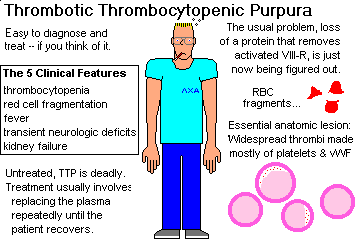
  •  Thrombotic thrombocytopenic purpura (TTP), a rare blood disorder


Figure : Thrombotic thrombocytopenic purpura (TTP)

  • Toxins, such as alcohol, heavy metals and cocaine
  •  Vasculitis, an inflammation of blood vessels
  • Urine blockage in the kidneys


Factors that may increase risk of chronic kidney failure include:

  • Diabetes
  • High blood pressure
  • Heart disease
  • Smoking
  • Obesity
  • High cholesterol
  • Family history of kidney disease
  • Age 65 or older
  • Chronic kidney failure occurs when a disease or condition impairs kidney function, causing kidney damage to worsen over several months or years.


Conditions that commonly cause chronic kidney failure include:
  • Glomerulonephritis
  •  Polycystic kidney disease
  • Prolonged obstruction of the urinary tract, from conditions such as enlarged prostate, kidney stones and some cancers
  •  Recurrent kidney infection, also called pyelonephritis
  • Use of recreational drugs can harm the kidneys and may lead to kidney failure and the need for dialysis. These drugs include:
§  Aerosols
§  Cocaine and crack cocaine
§  Heroin
§  Ketamine
§  LSD
§  Methamphetamines
§  Oxycontin
§  PCP ("angel dust")
§  Poppers


Risk factor for end stage renal disease:
  • Diabetes mellitus
  • Obesity
  • Hypertension                                                                       
  • Analgesic nephropathy.
  • Having chronic kidney disease.


Thank you for viewing our blog…..^^